Showing posts with label science fiction. Show all posts

Sunday, March 1, 2026

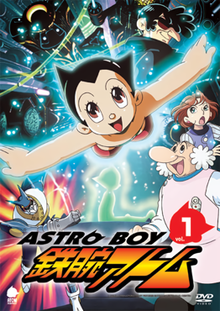
Astro Boy (2009):

Astro Boy (2009):

I finally got around to watching Astro Boy (2009), and you know what? I liked it. Not loved it. Not “This redefined Astro Boy”- kind of liked. But, liked it.

Let’s just get this out of the way. Yeah, the visuals are kind of dated. It’s very 2009 CGI. Shiny metal, slightly rubbery faces, and that weird in-between era where animation hadn’t quite figured out how to stylize humans yet It’s fine. It works. It feels like a Saturday afternoon kids’ movie.

One of my biggest mixed feelings is how they re-imagined the world. In the original anime created by Osamu Tezuka, Astro’s adventures spanned the cosmos. There were robot wars on the Moon. Moral dilemmas across continents. Wild sci-fi ideas that felt boundless.

Here, Metro City is basically a floating city-state, hovering above a trashed Earth. It’s very “Metropolis-lite.” It grounds the story, which makes sense for an American family film, but it also shrinks the scope dramatically. The universe feels smaller. Safer. Contained.

They do sprinkle in nods to older characters and lore, which longtime fans will recognize. But the characterizations? Totally different. And that’s fine. I get that they were probably setting up a new franchise direction. It’s just… this version of Astro Boy, aside from the name and powers, feels barely recognizable.

One thing I genuinely enjoyed was the humor.

Yes, including the now-infamous:

“I have machine guns in… my butt???”

It’s dumb. It’s juvenile. It absolutely got a laugh out of me.

There are also some sweet friendship beats, especially once Astro lands on the surface and ends up with the junkyard kids. It leans heavily into the American “ragtag group of misfits who come together” formula. Predictable? Sure. But it’s warm.

One thing that really stood out to me is how simplified the themes are. Classic Astro Boy wrestles with identity. What does it mean to be human? Can robots have souls? Can they coexist with humanity? His heart, metaphorically and sometimes literally, is tied to something spiritual.

In this movie, it’s Blue Core vs. Red Core. Good vs. Evil. Intention vs. corruption. It’s very literal. Almost like the movie is afraid to wade into anything messier or more philosophical.

Astro’s journey toward humanity gets glossed over. Instead of grappling deeply with what he is, the emotional takeaway becomes: “He’s a good friend.” Which, to be fair, Astro has always been. But he’s also a robot navigating a complicated world. That complexity gets reduced to “outsider kid trying to fit in.”

It works for a children’s movie. It just feels restrained.

The voice cast is kind of stacked, which makes the restraint even more noticeable. Nicolas Cage plays Tenma in a surprisingly subdued performance. Bill Nighy brings dignity and warmth to Dr. Elefun. Donald Sutherland goes full militaristic villain as President Stone. Nathan Lane as Hamegg is easily the most fun performance in the movie... he sounds like he’s having a blast. There’s also Kristen Bell (pre-Frozen) as Cora and Samuel L. Jackson as Zog, the ancient construction bot.

It’s such a tremendous lineup. And yet the script keeps everything so safe. Even during the big climax, a showdown with President Stone who's piloting a giant robot, it never really lets Astro go wild. He fires lasers out of his hand cannons, looks at them, and goes, “Huh. Cool.”

And that’s kind of the vibe of the whole movie.

Huh. Cool.

But not much more.

I don’t hate this version. I actually think it’s a perfectly decent kids’ action movie. Throw in some good snacks, settle in, and you’ll have a good time.

But compared to the 2003 anime series, or especially the original 1960s or 1980s Tezuka vision, it feels cautious. Smaller. A little too afraid to let Astro ask the big questions. A little too determined to translate everything into simple, digestible morality.

Astro Boy has always been a good friend. But he’s also a robot built after Tenma's grief for his dead son. A machine searching for humanity. A hero navigating prejudice and war and loss.

This movie hints at those things, and then backs away.

Still, it’s always good to revisit Astro Boy in any form. And for what it is (A mid-2000s Americanized reboot trying to introduce him to a new generation.) it’s good.

Not cosmic. Not profound.

But good.

Wednesday, February 12, 2025

SILICON DREAMS (2021):

SILICON DREAMS (2021):

“It’s 2065, and you are an interrogator-model android tasked with rooting out deviants among your own kind. You must probe for lies, monitor and exploit emotional spikes, earn the trust of your subjects, and make the final call: release, or destroy?”

-Steam Synopsis

So, I managed to get an ending for Silicon Dreams. It's sort of like a visual novel/cyberpunk mystery game. You work for a mega-corporation KRONOS Robotics. They send in Androids who are malfunctioning. Getting emotional, violent, in love, feels human, etc. You interrogate them until you find out what's wrong, and make recommendations whether to reset, kill, or keep the android as is. So far, so good.

Later on in the game, you learn about rebel groups of androids that want to be human, or in love, and doctors or teachers that want to help them, and you're supposed to either hunt them down or join the resistance. That's supposed to be the game's moral dilemma. The problem is, (for me.) some of the game's mechanics directly conflict with getting a “good” moral ending.

In order to stay employed at KRONOS, you have points out of 100. If your score falls low enough, you can't stay in the game. So, on a certain level, you have to maintain points just to keep playing. And, although we're told in-game by various Androids or humans that KRONOS is evil, and they control them, etc., I just never saw enough evidence that KRONOS was evil to care. At a point, you can just start doing your job just to finish the game.

It certainly doesn't help when the rebel androids or humans start threatening you, hacking androids and planning to bomb KRONOS multiple times. I will say, there's a lot I agree with tonally in the game. I get that maybe I'm supposed to feel like KRONOS is evil, and manipulating robots and people. I just wish the rebels...and the Androids that want to escape, were less violent and whiny. It's not a moral dilemma, it's just called having a job.

For example, an android comes in. We know she's been working with a scientist to help Androids escape. I'm trying my best to keep her calm (The game registers emotions like “Fear” “Anger” “Joy” “Disgust”.) Well, none of that mattered, because she blows herself up when you ask about removing her hard drive to get the scientist's location, after cursing the company.

Frankly, the game just feels like a checklist to me. I know what I'm supposed to feel, but in the end I didn't care. Another time, my score fell so low, for misdiagnosing Androids that KRONOS started to suspect that I was part of the resistance. Well, I wanted to keep my job. So, I went into interrogation myself, gave all the safe, pro-KRONOS answers, and boom, reputation back up to 80.

In the end, an android comes in threatening to release a video proving androids have emotions. Which is fine, I guess. Wouldn't have particularly mattered to me. But, of course, it turns out, he has a bomb in his stomach. Well, now I'm going to disarm the bomb and arrest him. This of course, got me to the pro-company ending, where I became assistant to the Vice President of KRONOS. I never really felt one way or the other about the company. I just wanted to finish the game.

I guess I wanted to help humans and rebels, but I also wanted to keep playing, in which case, you need to stay employed. By the way, if an android started showing excess emotion, I usually just reset them. Which sometimes got me in trouble with the company, either because a customer was dissatisfied, or the android had evidence the company needed on rebels. But, again, I just kept doing my job, giving pro-company answers, and completing my diagnostics, and I could keep playing.

I don't know. I don't really recommend the game, unless you really like those scenes in Blade Runner where they're diagnosing androids. That's clearly what this game was inspired by. But, I just didn't see enough evidence of the “evil corporation” being evil for me to care about androids that claim they want to be human, or any of the rebels. I did have plenty of androids try to bomb me, or hack me. So, mostly I just did my job for KRONOS. As far as I could see, the only evidence that KRONOS was evil, was that they are a mega-corporation, not that they directly interfered in the lives of androids or consumers.

I wish I could recommend the game. I love robots, Blade Runner, and sci-fi. But, this has all the moral subtlety of an angsty teenager. It's hard to care for rebels when they're constantly violent. It's hard to care for androids who want more emotions when they are clearly unstable. Again, I can't help feeling that they were supposed to be more sympathetic. That KRONOS was supposed to be wrong. But, I had to keep up my points to keep playing. Oh, and also rebels kept bombing me, and androids kept hacking me. So, maybe that had more to do with it.

In conclusion, the game has some neat mechanics, but fails in that it has black-and-white moral dilemmas. By the end, I would just whiff entire cases just to move the game along. I get that it wants to be about big issues, moral dilemmas, inducing emotions, etc. All you need to do is keep up your points. It's a classic case of “show, don't tell”. It's hard to believe the corporation is evil, no matter how many times you tell me...when it was the rebels who actively tried to kill me.

What was the worst KRONOS could do? Deactivate me? Big deal. Rebels and androids had tried that already. I just gave my answers, and kept playing. I wish I wanted to play again. I don't. But, if you do, it's on Steam. Maybe it would've meant more to me if I were a teenager. I don't know. But, I got one play-through, and that was enough for me.

Thursday, October 31, 2024

Connected Hearts: Visual Novel (2017)

Connected Hearts: Visual Novel (2017):

“Gary is caught in a strange dream and now he must overcome the adversities on his path or perish in the attempt. In this adventure you will meet 3 children in dream-like scenarios, next to a mysterious girl who talks about a promise.” - IMDB, “Connected Hearts: Visual Novel”

So, I played Connected Hearts: Visual Novel. I mistakenly thought it would be a romance visual novel, but instead it's a surreal fantasy adventure. That said, the story is pretty good for the adventure story that it is. There are 2 drawbacks immediately though. One is that it's obviously translated from Russian, and there are a lot of typos, and phrases that repeat. (Get ready to read “I swallow saliva...” a lot. I'm guessing they meant gulp, which they actually write once; much to my relief.) But, I guess in the end, the surrealism of the adventure drew me in.

It starts like a romance visual novel. A guy named Gary dreams of a girl, but then discovers that he can travel between dream worlds. He can't wake up. So, each dream world has a child that you're supposed to protect from a dream world monster. You teach them about growing up, facing their fears, embracing their talents, etc. So, it's pretty solid, storywise. Let's get to the plots.

There are 4 dream worlds. The Forest of Whispers (misspelled as Wishpers, but not a dealbreaker.) was the first one I entered. There are wolves there that insult you, and look scary. If you run from them, you'll discover the first child, Mary. She's alone and scared and her cabin is all she knows of the world. You tell her to be brave, and enter a maze where you just keep going in circles.

You soon discover the wolves don't actually do anything. They just insult you. So, you guide Mary to the exit, having conquered your fears. The next world is the Kingdom of the Sun, where strange robot-like inhabitants wear masks and live in fear of people from the “real world”. Their king, Henry, is a talented young boy who built the kingdom from his mind. You have to convince him reality is worth facing. You can't just isolate yourself inside your fantasy.

After that, you escape his robot guards, and return to the dream world hub. The next story I chose was Into the Deep. In this one, a young boy called Royer is trapped on a boat with vicious mermen. Some of the decisions you have to make here to survive, like not hiding from the monster, and “throwing” your lead pipe at a Merman (Did they mean swing?) are all pretty good for the “face your fear” theme. But, I think this one was my least favorite. The robots in The Kingdom of The Sun were the coolest.

Having done all that, you can then visit Alice's Castle. Alice is the girl Gary sees in a dream at the start of the game. Here, you find notes about “Director Heart”, and psychological test subjects all demonstrating a particular phobia. I can guess that Alice created the “dream worlds” to trap Director Hearts' children. Her phobia is chronophobia, and the entire game has been about maturing and confronting fear. So far so good, translation issues aside.

This last bit is where the game loses me. After you confront Alice, she asks you if you remember a promise you made to her. You say no. She says to remember the promise, you have to dream again. Then, the game repeats! I can easily guess, based on her choronophobia, that the promise was never to grow up, or to stay with her forever, or something like that. Something antithetical to the game's theme of maturity and bravery. Maybe I'll finish the game later, but I'm not playing through the same game again right now just to get the “real ending”.

All in all, Connected Hearts: Visual Novel is a strong fable-like story, with a good central message, and vivid imagination that helps it through some of its shortcomings. I still think the title misleads you into thinking it's a romance novel, and not a surreal adventure to save the Heart children. I'll finish it eventually, and I do recommend it, but right now I need a break. There's only so many times I can read Russian-to-English typos, and the novelty of the fantasy story has sort of worn off. That said, I do reccommend at least one playthrough.

The typos weren't the dealbreaker. I'll come back to it. I guess I just don't like games that repeat. It just strikes me as padding out the game. Particularly, when they are full of scenes I just played through. It's exhausting. For now, I need a break. But, It's free on Steam. Check it out!

Saturday, February 24, 2024

Dual Blades (2002):

Dual Blades (2002):

Dual Blades (2002):

"Dual Blades is a fighting video game published by Metro3D, Inc. for the Game Boy Advance. It is a fighting game with single player and player versus player modes. It features a "power combining system" which was very new for the genre at that time. This system allows players to create their own fighting style.”

Fighters throughout time come to fight for the Dual Blades, a weapon that will grant immortality. First off, despite the power combining system, you pretty much just have light attack (thrust) and heavy attack. (Slash.) So, it all comes down to your weapon and character, as this is a weapon-based fighting game. My favorite character so far is Shin, the feudal Japanese magician who uses a spear. He gets an ending where he challenges the best fighters throughout time again, essentially just relaunching the tournament.

Others include Brandon an American vagabond with a sword, Efe, an Ottoman warrior with a scimitar, a female ninja named Kunonichi, a beastman, a sorcerer, a Russian witch, and the last boss who is unplayable. He's an immortal Roman named Alpe Ren, who can move super fast and switch instantly between “weapon mode” and “armor mode”. The only thing comparable that you as a player can do is choose between a defensive or offensive fighting style before the fight.

For a Game Boy Advance title, it does some advanced things for the time in 2002. I don't really think there's much reason to go back to it. It is super violent, which is unusual for even a weapon-based fighting game back then. But, even watching characters get sliced in half as the final heavy attack lands gets boring after a while. There are updated modern versions and sequels on Steam, but the original is pretty one-note (i.e. the power-combining system.) and stale by now.

My favorite ending to the game though, is Duke the English knight's ending, who uses the Dual Blades to umm...stop the Viking invasions of England? It's an interesting idea. It's ultimately how I feel about Dual Blades. It's an interesting idea. But, it doesn't really follow through, even though it could've completely changed things.

Friday, February 16, 2024

Orion Trail (2015):

Orion Trail (2015):

“Dare to travel the absurd and dangerous Orion Trail, where only the luckiest, bravest, and most stubborn captains will make it all the way to the end. Become famously incredible or incredibly dead in this single player choose-your-own-space-adventure!”

The Star Trek parody game that mixes Oregon Trail with board games, and...well, Oregon Trail mechanics. The name of the game here is funny stuff happening. You start off by selecting 4 crew members (Officers) who will influence your stats (Diplomacy, Bravado, Tactics, Science, and Attack.) From there the game takes on resource management mechanics (Crew, food, fuel, and hull.) and works like a board game.

Each space you “move” takes fuel and food. Sometimes you'll have random encounters that will add or take away skills and resources (Lost your lucky underwear -1 Bravado. Took a martial arts class +1 attack, etc.) The meat of the game however is funny encounters when you get to planets. Whether it's dealing with annoying party aliens or the villainous “Underbaker”. Each scenario gives you a choice of how to proceed, with each solution using a stat.

For example, if you're dealing with the Underbaker, the attack solution is to blast him. The dialogue solution is to get him to cut a deal with you, the tactical solution is to get him talking, and disable his bakery, and the bravado solution is to steal his chef hat. Each one of these then turns into a probability out of 10. So, if you have 6 bravado, or whatever, 6 squares will be ok, 2 will be failure 1 will be complete failure and another will be complete success. Of course, the higher your stats, the more chances you have for success.

So, the game is all resource management and probability with comedy mixed in. Some of the events parody Star Trek directly like evil clone planets, and some parody other elements like Rogue AI, or a planet full of Michael Jackson Thriller zombies. Willy Wonka's factory and giant space malls are also part of it. Just make sure not to get lost in the giant space mall.

The goal of the game is to reach the space station at the end, where you receive your title based on how many successes or failures you had, and what stats you most used. For example, mostly successes will earn you the adjective “Admirable ____” So, if you used bravado, you'd be “Admirable Rule-Breaker”. Or “Unfortunate Scientist” if you used mostly science and got failures.

There are 6 missions (boards) to use, each one harder and longer than the next. I mostly like this game, since the emphasis is on probability and funny stuff rather than skill. I can always have a good time, even if my resources run out and we all die, at least it'll be funny. The same stuff kind of happens on every board, you get used to it after a while. But, there's enough random elements to keep me coming back. Check it out!

Saturday, February 3, 2024

Solo Leveling (2024):

Solo Leveling (2024):

“In a world of gifted hunters and monsters, a weak hunter Sung Jinwoo gains extraordinary powers through a mysterious program, leading him to become one of the strongest hunters and conquering even the strongest dungeons.”

Jinwoo is a 20 year old down-on-his-luck guy who suddenly finds himself in a world where RPG monsters invade Korea through a “gate”. The government learns how to use magic as energy, gold, classes, and skills, just like a game world and hires them as “hunters” to clear monster dungeons. Jinwoo joins a party with a high-ranked leader. Since Jinwoo is weak, he only has a cheap knife to start with.

One day, they end up trapped by giant god statues. But, Jinwoo is the only one who finds out that there is no boss fight. It's a puzzle. That lets him start again in the game world. After his party is defeated at various points in the puzzle, he wakes up again, and slowly learns the rules of the game world, including what gets points and how to get stronger.

Slowly, he begins to build his stats and strength, and learn where the monsters are, as well as their weakness. Now, he can bring up game screens and inventories to enhance his stats and abilities, as well as make weapons appear like swords. No more cheap knives. Jinwoo decides to focus on strength, and has a real-life muscular body as a result of spending his points on strength. However, to avoid attention, he still puts on a front of being very weak, so he can gain “levels” while adventuring solo.

Overall, it's a good mix of real-world and videogame mechanics. The monsters are interesting enough that it keeps me wondering what will happen next. It's hyper-violent, so it never gets boring. There's wolves, goblins, giant ants, snakes, and spiders. It's been fun to see Jinwoo's transformation from weakling to hero thanks to videogame-style Fighter specialization. It gives hope to gamers. (Not that I really am, these days.) Check it out!

Wednesday, January 24, 2024

Metropolis (1927):

"In a futuristic city sharply divided between the working class and the city planners, the son of the city's mastermind falls in love with a working-class prophet who predicts the coming of a savior to mediate their differences."

I just want to talk about a movie I like: Metropolis from 1927. It's one of the first sci-fi films, a silent movie from Germany. It's about a future society divided between the rich and the poor. The poor do all the labor and make all the machines. (It's from 1927, so we're talking giant machines with clocks and pumps, it all looks very towering and uncanny.)

One day, a rich young man named Freder discovers a poor woman in disguise, Maria. He follows her down from the opulent bright gardens where the rich enjoy the labor of the poor, into the feverish Machine Hell that is the poor community below. The machine mouths are even designed to look like demons.

Moved by the plight of the poor, Freder joins Maria in an underground church where she preaches the Tower of Babel story. It is apt here because of the divide between the rich and the poor. The hands that built the tower to Heaven knew nothing of the brains that conceived it. The mediator between the head and the hands, so Maria says, must be the heart.

However, Freder's father doesn't like that his son is meeting with the poor and has discovered their world. So, he makes plans with a wild-looking mad scientist named Rotwang to build a robot of Maria and place mistrust in the people's hearts. What follows is some of the best special effects in cinema history, as the robot takes the form of Maria, with electrical effects and all, inside Rotwang's evil lab.

The evil robot Maria preaches that the workers destroy the machines and the rich. She even dances in a show, to display how evil and tempting she is. Freder even discovers the robot Maria canoodling with his father, and falls into a delirium, with great visual effects, where he sees the grim reaper and a skewed reality reflects his madness.

Freder returns to the poor after recovery, and exposes the False Maria. He works with the head mechanic Grot to free Maria. Rotwang and Freder fight as Maria escapes. Rotwang hallucinates that his robot (Maschinenmensch in German.) is the Goddess Hel. Rotwang finally falls of the roof, and dies. Freder shakes hands with Grot, fulfilling his role as the mediator between the head and heart.

Even today, Metropolis is a technical marvel which invented many sci-fi tropes we take for granted. Things like the divide between an opulent rich society and a technologically oppressed poor, a wild mad scientist, and even robots...are seen here for the first time on film. The visual designs, creating a towering Heaven, and a technological Hell below, are still relevant and marvelous.

Whatever version of this film you can find, watch it if you have a chance. I first saw the 2006 version. Several scenes were filled in with title cards and lost to time. But now, through the miracles of technology, you can watch the whole thing for free on YouTube. It's amazing that a sci-fi film from almost 100 years ago continues to inspire. It's a true testament to the power of film-making.

Wednesday, January 17, 2024

Street Fighter IV: The Ties That Bind (2009)

Street Fighter IV: The Ties That Bind (2009):

“An anime OVA based on the Street Fighter IV videogame.”

OVA means Original Video Animation. In this case, this was an OVA intended solely to promote the then-impending release of Street Fighter IV in 2010. It introduces new characters like Sakura, Juri, Crimson Viper, and Seth. It also introduces the new villain organization S.I.N. Let's get right into it!

Right off the bat, Cammy and her team are investigating a burst of power from South America, eventually calling in Guile and Chun Li. But, their investigation leads them to S.I.N. Chun Li is on to Juri. S.I.N. is who's investigating Ryu's power, the “murderous intent”. (Satsui no Hado.)

Meanwhile, back in the US, Crimson Viper is a CIA agent trying to track down Ryu through Ken Masters. She tracks him down, gets Ryu's location, and fights him in Japan, trying to get him to unleash his full power, just like Seth. Crimson Viper fights Cammy off, and Sakura (The Ryu fangirl.) shows up to cry, and convince Ryu not to turn evil.

Ryu surrenders himself to the CIA, who turns him into S.I.N. He and Seth (And Ken!) fight. It's a pretty straightforward OVA. It basically establishes who's fighting for Good vs. Evil. Plus, it shows that the then-new characters could kick some of the old characters' butts. It's just enough to make you want to play Street Fighter 4. It's only about 64 minutes long. Give it a watch if you're a Street Fighter fan like me.

Sunday, February 12, 2023

Flying Phantom Ship (1969):

Flying Phantom Ship (1969):

“Hayato's peaceful life with his parents and his dog is brought to a dramatic, terrible end when a giant robot, said to be sent from a flying ghost ship, devastates the city, killing hundreds including Hayato's parents.”

It all begins with a fishing trip where Hayato's dad encounters the ghost ship captain in a haunted castle. The captain is actually there to scare his company's boss, who is in the castle, but they don't know that. So, after saving his dad's boss from the castle, a giant golem attacks Tokyo, claiming to be from the captain. Hayato's family dies in the attack, and he finds out they aren't his real parents. So, what began as a playful Scooby Doo mystery takes a hard turn into Japanese monster movie territory. Hayato tells his dog to get lost, and soon discovers that the boss (named Kuroshio.) was behind the golem attack, not the pirate captain, after he reveals his underground lair. Turns out, the attack is a ploy to promote Japanese industry and get everyone addicted to Boa Juice, Hayato's favorite soda pop.

The soda is actually produced by a sea monster Boa, who sends a giant crab monster to Tokyo and turns Kuroshio into soda for failing to disguise the attack. Meanwhile, Hayato joins the ghost ship captain, who is actually a defender of Japan. His ship is actually a robot ship, equipped with lasers and forcefields.

On the ship, Hayato vows to defeat Boa, and give up his favorite soda to defend the people. The pirate captain takes off his skull mask, and reveals himself as Hayato's real father. We're introduced to Tori, his daughter (and Hayato's sister.) who motivates him to find Boa. This movie wears a lot of different hats. On one hand, it's a mystery, then a monster movie, then an adventure.

As it turns into an undersea adventure, we see that Boa is a giant squid. His body is invulnerable to torpedo and laser attacks. Tori discovers by accidentally hitting an EMP pulse button during a crash that Boa is actually a robot, and they can defeat him with electromagnetism. The monster goes haywire, and buries itself after crashing into a cave wall. Hayato is congratulated back home by his new family, and becomes the new ghost ship captain.

So, is this all worth watching? Yes, but only because it's very short: 61 mins. It's exciting, but never really picks a tone. It's exciting, but I wish it were more focused. As it is, it's a good adventure flick. I'd say give it a watch anyway you can. It's worth it just to see all the craziness.

It wears a lot of the trends of 1960s Japan: Monster attacks, robots, environmentalist themes, family switcheroos...but it wears them all like a finely-tailored suit. Trivia: for its anti-capitalist themes this was the first ever Japanese anime shown in Russia (USSR), and the animation on the ship was done by Hayao Miyazaki.

Thursday, February 9, 2023

Astro Boy (2004 series DVD set):

Astro Boy (2004 series DVD set):

I finished watching the 2004 DVD set for Astro Boy recently. It was good. Even though it's a reboot, it followed a lot of Osamu Tezuka's original Pinocchio-type themes from the 1960s series. At its heart, it's about a boy with the power to decide what he wants to do, and who his friends are, even if they appear mean at first. To be honest, I got bored around the 4th DVD when the adventures became more villain-of-the-week episodic, but once it returned to the evil father story from discs 1 and 2, then it was action-packed and really focused.

There are humans who hate robots and humans who wanna be robots, and humans who frame robots for crimes, and robot supremacists. But, Astro Boy fights for everyone. A little cheesy, but good cheese. The last disc is really action-packed too. Robots form their own independent nation, and Astro Boy fights to minimize the damage. Not quite like modern anime violent, but it's on par with something like Avatar: The Last Airbender.

For me, it was refreshing to see something from anime say in effect, that the rules of society are important, but we all have free will. Free will is not a common theme in modern anime, in my opinion. That was nice to see on top of Astro Boy's Good vs. Evil story, with Dr. O'Shay being good and Dr. Tenma being evil. Apart from Good vs. Evil, he learns from having friends, fighting villains (Robot or human.) and playing games (Rocketball and visiting the circus.) that being fair is important. Plus, he has cool powers like an arm cannon, rocket boots, finger lasers, and uh, he can...talk to trees? Anyway, give it a watch if you're itching for some good retro-future cheesiness.

Thursday, August 11, 2022

Bubble (2022):


Bubble (2022):

“Hibiki plummets into the sea but is saved by a girl with mysterious powers.”

Hibiki belongs to a parkour team in post-apocalyptic Tokyo after Tokyo becomes filled with bubbles and cut off from the rest of the world. His team is called the Blue Blazes, or BB. They battle other teams like the Under Takers, or The Mad Lobsters in this Capture The Flag parkour sport. One day, Hibiki falls into the ocean water while playing, and swears he sees a mermaid.

This mermaid is actually a feral girl who he names Uta, with a strange secret. She acts like a cat, and has a strange attraction to vortex patterns and The Little Mermaid fairytale. Stranger still, when she hums a tune, the bubbles react to her harmony. Later, she joins the parkour team and helps them defeat a technologically advanced team, The Under Takers, by using the bubbles as stepping stones.

The Under Takers want revenge, and so kidnap Makoto, one of the team members, and challenge BB to a death match. Just then, Uta starts to come apart literally. She's made of bubbles! The team and the morticians have to come find her as the world around them is ripped apart by a vortex of angry bubbles. And soon, Hibiki discovers Uta dissolving into seafoam, just like the mermaid in the story.

Bubble is a very peculiar anime. On one hand, it's a sports drama in post-apocalyptic Tokyo. On the other it's a romantic fairytale bursting at the seams with poetry about the transitory nature of existence, and how all things return back to their source: stars, water, plants, bodies, seashells. The vortex pattern is everywhere.

In particular, I liked that Bubble had good disability representation. Hibiki is shown as having some form of audio sensitivity. But, despite this, he can hear the song of the bubbles. In addition, his friend and mentor Shin has a prosthetic leg, which plays further into the theme of the body as transitory. But, does it add up to anything? Well, I suppose it depends if you like romance. If you do, I recommend this one. For me, personally, I say give it a watch on Netflix. If not for romance, then sci-fi sports action!

Friday, June 24, 2022

Tron (1982):


Tron (1982):

“A computer hacker is abducted into the digital world and forced to participate in gladiatorial games where his only chance of escape is with the help of a heroic security program.”

Tron is a very interesting movie. It's about computer programmer, Kevin Flynn, who gets zapped into the computer world while programming his game, Space Paranoids. The Master Control from The Dillinger Corporation has grown tired of assimilating corporate data, and wants to add the data of people and nations to itself. So, it abducts Kevin and puts him inside the game room, which is designed like an old gladiatorial arena where deleted programs usually compete for freedom. Kevin is the first human to be zapped inside the computer.

Inside the computer is a very weird and surreal early 3D environment. The programs all wear neon outfits that are blue or red for good or evil. It almost reminds me a little of German Expressionism, in that abstract shapes and colors convey emotion inside a twisted reality. Once inside, Kevin becomes somewhat of a messiah figure. The programs look at the Users like gods. And the Master Control only wants to add to himself.

It tries to punish Kevin by making him compete in the games, but he goes off grid with his allies Tron, RAM, and Yori. Tron outruns some tanks sent after them. Because Kevin worked on the game, he can pilot some of the vehicles meant for other games too. Tron uploads this data to his disk, which all programs have, which they'll need to defeat the Master Control. They come to a pool where they can replenish their data like water after the chase, but RAM dies, or rather, “de-rezzes”.

Before he disappears, Kevin gains control of a glider called a Recognizer, which he can pilot like an arcade game with a joystick. Kevin brings Tron and Yori to an unfinished part of the game, but since he programmed it, he can get through. Meanwhile, Tron and Yori have to get through the control tower guard who resembles the User DuMont to talk to Kevin and join up with him.

They find the real DuMont being tortured by Master Control in a room full of red, tortured programs. Finally, Tron challenges the head slaver Captain Sark to the disk-throwing game, and slices his brain open. It's actually quite a grizzly scene, even in 80s CGI. Flynn challenges the Master Control and helps Tron, as a program, add all his data disk to Master Control, freeing the system. All the lights turn blue, and the programs are free.

Overall, Tron is pretty great. It's a little goofy in its use of computer terminology, but I like the strange operatic feel it all has. If programs were alive, they'd probably see us as messiahs. And I like the gladiatorial story this opens up to the viewer...even if it is a little cheesy, it does raise good points. Does Machine serve Man, or does Man serve Machine? It's high-concept sci-fi.

And in the end, the Machine (Tron and his friends.) is helping us, the Users. (Kevin Flynn.) Meanwhile, the 3D gives it a sort of mesmerizing dream-like quality, so it's never boring to watch. I'd say if you have time, give it a watch. It's free on Disney+!

Tuesday, June 14, 2022

Interstella 5555: The 5tory of The 5ecret 5tar 5ystem (2003):


Interstella 5555: The 5tory of The 5ecret 5tar 5ystem (2003):

“A continuation of the story told in the Daft Punk music videos "One More Time," "Aerodynamic," "Digital Love," and "Harder, Better, Faster, Stronger."”

Interstella 5555 tells the story of an alien pop band who is abducted and given new Earth identities. In effect, it is an anime (French/Japanese with Toei and Daft Life Productions) music video for Daft Punk's Discovery album. Each track provides the sounds. But, the anime does give a nice little narrative touch to an already great album.

The band is abducted from the secret star system after their done they're playing “One More Time”. The concert is invaded, they're gassed, given new identities and memories, and start to play for a devious record producer as The CrescenDolls. This is also a track name. Over time, they get tired and lethargic. But then, one of their old alien guards swoops down, takes the band, and tells them about their alien lives. They discover that they are being drained by their record producer Darkwood!

Next, they attempt to break into Darkwood Manor. They learn how he is an ancient evil man who thrives on gold records. After they steal back their memory disks, security attempts to stop them and they knock out the keyboard player, who reverts back to his original blue skin. Shocked, they get him to a hospital. But, the band breaks them out and they escape in a truck, with terminator-like guards following.

Then, they rocket off in a ship, and the Earth says goodbye to the CrescenDolls, who have reverted back to alien names and forms . After that, they broadcast their final song (“Too Long” from the Discovery album.) to Earth from the secret star system. Finally, a boy falling asleep stops listening to the album on a vinyl record player, as if it were all a dream.

Really, I just wanted to review this movie because it is an odd little piece of music history. A Japanese animation for a French pop band's music video. But, it also has aliens, science fiction tropes, music, and anime. All of which are topics that I cover. If you like Daft Punk or just want something neat to check out, give it a watch on YouTube.


Monday, May 30, 2022

Hansel and Gretel: Witch Hunters (2013):


Hansel and Gretel: Witch Hunters (2013):

“Brother/sister duo Hansel and Gretel are professional witch-hunters who help innocent villagers. One day they stumble upon a case that could hold the key to their past.”

Well, the word of the day is anachronism. This movie follows Hansel and Gretel as modern action heroes, who hunt down witches and somehow live in the 19th century fairytale world. One day, they stop the sheriff of Augsburg from executing a woman falsely accused of being a witch. They know because she doesn't look like one. Meanwhile, Hansel and Gretel set about trapping witches with audio recordings, and hunting them down with shotguns and machine guns.

Along the way, they find that one of the head witches, Muriel, has a secret plan to abduct children and become impervious to fire. Fire, in this world, is the only known way to kill a witch. Except when Hansel and Gretel are injured by Muriel's witches, they discover there are good witches who have access to healing and holy water. Including the woman they saved before, Adrianna. Hansel is saved by Adrianna and Gretel is saved by a troll named Edward.

Later, Muriel attacks the town itself to try to sacrifice children, and reveals the truth to Hansel and Gretel. Their mother was a good witch, and they abducted them because eating them would've made them invulnerable to good witch magic. So, Hansel and Gretel meet up with Adrianna, and storm the dark witch castle, armed with blessed machine gun crossbows, miniguns, shotguns, tripwires, and tasers. They attack right before the ritual can be performed, and mow them down with the blessed weapons.

Finally, Edward and Adrianna join the party, and the adventure draws to a close. I would recommend this movie if you have good snacks. It's definitely a popcorn flick, drawing heavily on the action-fairytale trope of the early 2010s like Jack The Giant Slayer, and Snow White and The Huntsman. But, it's free on Prime, so as long as you don't take it too seriously, it's a good time.

Wednesday, April 27, 2022

Demolition Man (1993):


Demolition Man (1993):

“A police officer is brought out of suspended animation in prison to pursue an old ultra-violent nemesis who is loose in a non-violent future society.”

Sylvester Stallone plays John Spartan, a hard-nosed cop who pursues Simon Phoenix, a crazy criminal. Now, after he burns down part of a crime-ridden LA, he and Phoenix end up in a non-violent future after being frozen. This leads to some pretty funny scenes. For example, the police can't apprehend Phoenix, and don't know what to do after he responds with an aggressive remark.

But also, John Spartan can't adjust to the future world, either. Swearing is outlawed, and he racks up fines for each curse word. He doesn't know that all restaurants are now Taco Bell, or that people wipe themselves with seashells now instead of toilet paper, so he has to use the curse fines as toilet paper. Sandra Bullock as Lenina Huxley helps him adjust to the future, but she keeps getting old expressions wrong. (i.e. “blow this guy” instead of blow him away.) That's all pretty funny.

Apart from the absurdist comedy of an action hero stuck in a pacified future, there's also some great action scenes. Phoenix kills a bunch of guards and museum goers after getting guns from a firearm exhibit. He and Spartan have a good shootout in the museum. Then, in a nod maybe to Terminator killing T-1000, Phoenix later shatters into pieces after being trapped by dry ice in a factory.

But, it turns out that Phoenix himself wasn't operating alone. He was being hypnotized by Dr. Cocteau, the founder of this supposed utopia. He was using him to assassinate Edgar Friendly (Dennis Leary), a rebel leader who lives underground and rejects society's rules. In this way, the film also touches on some social issues, such as censorship, just use of power, and the role of violence in peacekeeping. It's influenced by Aldous Huxley's Brave New World.

Overall, I'd recommend the film to anyone who likes sci-fi, absurdist comedy, and/or good action movies. I enjoyed it. Give it a watch on Hulu, if you get a chance. On the surface, it's a good shoot-em-up. But, it isn't afraid to make you laugh, or think. Truly, a modern sci-fi classic with a unique blend of comedy, action, and philosophy.

Wednesday, April 20, 2022

ONE PUNCH MAN SEASON 1 (2015):


ONE PUNCH MAN SEASON 1 (2015):

“The story of Saitama, a hero that does it just for fun and can defeat his enemies with a single punch.”

One Punch Man is something I've wanted to talk about for a long time, because it's so good. It's a comedy shonen. Usually, shonen are just about POWER GUYS who want POWER because POWER is good, so they quest to get more POWER. Here, Saitama already has ultimate power and is just doing the hero thing for fun. That's what makes it very fun and relaxing to watch, despite its action-packed shonen backdrop.

Early on in his hero career, he trains so hard he becomes bald. That's his origin. After that, he can knock out enemies with one punch. He even makes some enemies with the heroes from the Hero Association who are jealous of him. These make all the fights in Season 1 hilarious. The villains and other heroes talk a big game, and then it's over in one punch.

But, he doesn't just make enemies. While fighting a giant mosquito lady, Saitama befriends a cyborg Genos, who's training to become a hero. Saitama takes him on as a disciple. Then, One Punch Man takes out the “House of Evolution”, Hammerhead's "Paradiser Gang", and some others like “Speed o' Sound Sonic", who is a ninja. Eventually, Genos convinces Saitama to join the Hero Association, so he can have fans. From there, he passes the physical exam with flying colors while completely forgetting the oral test!

After multiple heroes struggle to take out the “Sea King”, One Punch Man arrives leisurely. After he punches him out, some kids and heroes start to claim that Saitama is a phony, or a job poacher. From there, the anime becomes a weird alien invasion story. Their leader Ouroboros has a heavily armored spaceship, and about 5 “final forms” of armor. Of course, the only thing Saitama really fights is boredom. He just says “Ok.” after Ouroboro's villain monologue. But, he has to break out his “finisher”: Serious Punch!

Even after all that, Saitama finds that most the aliens are good. So, he keeps to his apartment and lets them hang around. The reason I like Season 1 is it tells a pretty chill, self-contained story which is pretty much the opposite of your average self-serious, meandering action shonen. That alone makes it funny. The next seasons are about the arrival of the Hero Hunter villain Garou, and a tournament arc, with the ending teasing the arrival of the Monster Association. These are good, and deliciously self-depreciating, but nothing really compares to that first season.

One Punch Man is always looking for a good fight, but can never find it. Despite this, he's never boasting or talking himself up. He battles boredom, and gets excited for simple things like clearance deals on food. That's pretty much the entire joke. Some people hate that kind of humor, but I loved it. I haven't seen a shonen quite like it. If you've got a chance, definitely watch it. It's one of my favorites, and free on Hulu.

Tuesday, April 5, 2022

My Super Ex-Girlfriend (2006):


My Super Ex-Girlfriend (2006):

“When a regular guy dumps a superhero for her neediness, she uses her powers to make his life a living hell.”

Everyone in this movie is crazy. Even the superhero. Matt Saunders works in a design firm, and has bad luck with the ladies. His pervert friend Vaughn says the answer is just a quick hookup. Unfortunately, the woman he hooks up with is a superhero. Things start hot and heavy, as Jenny Johnson (a.k.a. G-Girl, whose hero moniker is never explained. What's the G stand for? Great? Gamma? Genetically-enhanced?) is just looking for reprieve from her job. But then, she gets psychotically possessive.

G-Girl routinely controls who Matt can see and won't let him go to work, breaks his stuff during making out, and is paranoid to a fault. When Matt tries to break up, she breaks his apartment, ruins his meetings (by stripping him with super speed in public.) and throws his car into space. At one point, she even throws a shark into his apartment. That was funny, because it was so unexpected!

One day, after a date, Matt is kidnapped by the goons of G-Girl's archnemesis Professor Bedlam. He reveals that he and G-Girl used to be in love. (After Professor Bedlam hangs Matt from the Statue of Liberty.) But, after she gained her powers from a meteor, she ignored him. Luckily, he has a piece of the meteor that gives her her power. If she gets too close, it will de-power her. Matt, tried of having his life screwed up, agrees.

Meanwhile, back at Matt's office, a girl named Hannah is always getting Matt to ogle her. I told you everyone is crazy in this film. G-Girl has been jealous of her since the beginning, so when she shows up as he's luring G-Girl towards the meteor, a huge fight erupts. But then, Hannah is exposed to the meteor, and can suddenly give G-Girl a fair fight. Then, “Berry” Bedlam realizes he should've gone out with G-Girl, and Hannah and Matt take it steady afterward.

Honestly, everyone in this movie is just a huge relationship red flag. I thought it would end with G-Girl realizing she's a villain, but I guess since it's a comedy, it's all played for laughs. But, the only one who kind of made sense was Bedlam. He shouldn't want to de-power her, but it absolutely makes sense in this case. Overall, this is a movie best enjoyed with snacks, and a huge grain of salt! It's free on Hulu, anyway.

Wednesday, March 16, 2022

The Final Countdown (1980):


The Final Countdown (1980):

“A modern aircraft carrier is thrown back in time to 1941 near Hawaii, just hours before the Japanese attack on Pearl Harbor.”

An aircraft carrier in 1980 gets caught up in a time storm, and ends up in 1941! With the Japanese about to attack, the crew now faces a conundrum. Do they attack, or let the attack happen to them? Well, first, the systems analyst (Warren Lasky, played by Martin Sheen.) is able to determine through records and radio frequencies that they are in 1941. Plus, Senator Samuel Chapman is also nearby on a yacht, so the time storm reality is confirmed. But, before they know who he is, they rescue him from Japanese planes. He was supposed to die in the attack!

Meanwhile, the Japanese pilot who attacked Chapman's yacht sneaks onboard the carrier and takes hostages, now armed with automatic rifles. Having already changed history, they have no choice but to defend themselves now. They communicate with the pilot in Japanese, and he gets scared and starts shooting. They take him out, and arrange for Chapman to be dropped off back at Pearl Harbor.

Chapman overhears this plan, and refuses to be dropped off. But, in order to preserve history, they tell him he won't be at Pearl Harbor. Chapman takes the helicopter crew hostage. Well, then Chapman's secretary falls in love with Wing Commander Owens, and agrees to be dropped off at a nearby island with him and her dog. Chapman kills himself accidentally by setting off a flare gun. Unknowningly, history is preserved.

But, not before Captain Yelland (Kirk Douglas.) gives the order to attack the Japanese planes, not knowing the course of history has just been saved. This opens the time portal back up, and they arrive back in 1980. Of course, who's waiting for Mr. Lasky back in DC, but Mr. Owens himself, his wife, and a miraculously 40+-year-old dog!

This was a great film. I was a bit surprised to find in buried on Tubi. It kind of reminded me of a very high-concept Star Trek episode or something. I haven't watched a good high-concept time travel sci-fi movie in a while. Definitely check it out if you can! I know I basically spoiled it, but half the fun is watching them figure out history and how they change courses. That's fun even if you know what's coming. Even the film synopsis is a huge spoiler!

Wednesday, March 9, 2022

Freaked (1993):


Freaked (1993):

“A vain actor, his best friend, and an activist end up at a mutant freak farm run by a weirdo scientist.”

It's sort of a weird Dr. Frankenstein meets Garbage Pail Kids gross-out comedy all wrapped in an early 90s MTV aesthetic. A salesman (Ricky.) goes to sell illegal fertilizer called Zygrot-24 from EES (Everything Except Shoes.) but ends up captured by a mad scientist (Dr. Skuggs.) and turned into a weird tumorous beast boy. His girlfriend and his best friend, Julie and Ernie, are combined into a Siamese twin. Then, they meet companions and plot their escape from the doctor.

Most of the humor comes from the grotesque freak designs. But, there are moments where it's like each scene is its own little parody. After being told to make the most of his freak form by his friend Worm, Ricky launches into a soliloquy from Shakespeare's Richard III, with subtitles for the “culturally illiterate”. There's even a Hollywood Squares bit that introduces Ricky's new friends including Ortiz the Dog Boy (Keanu Reeves), Worm, a giant worm man, Cowboy, a literal anthropomorphic cow, the Bearded Lady (Mr. T in a dress.), and Sockhead, who has a sock puppet for a head.

Now, EES comes in as soon as the freaks try to make their escape. Their plan is to make Americans more productive by turning them into freaks with more arms, hands, and no mouths to talk back. At the same time, Dr. Skuggs plans to turn Beast Boy Ricky into a super mega freak dedicated to evil, who will kill his friends to make room for more freaks. And then an amusement park!

It's definitely not a pretty movie to look at, but it does have comedic moments if you're in a gross-out irreverent headspace.In my favorite bit, Dr. Skruggs falls into a vat of Zygrot-24 and becomes the ultimate freak...a talk show host! You're definitely gonna need snacks for this one to enjoy it, but otherwise you can skip it! Don't say I didn't warn you, but you can watch the whole thing free on YouTube if you dare!

Tuesday, February 15, 2022

Steel Dawn (1987):


Steel Dawn (1987):

“In a post-apocalyptic world, a warrior wandering through the desert comes upon a group of settlers who are being menaced by the leader of a murderous gang who's after the water they control.”

Patrick Swayze plays a nomad passing through looking for food and shelter in an apocalyptic wasteland. He finds a family, and then has to protect them from roving raiders as they make plans to irrigate the town with a freshwater source. It's pretty much sci-fi action Roadhouse (1989), except instead of protecting a bar, he's protecting a post-nuclear war town.

And not only is he pursued by would-be invaders, but also people from his past, as it's hinted at that the nomad used to be a soldier in the last great war. Kasha (his would-be hostess.) makes plans to irrigate the town with her water supply, but this is what brings back trouble from the nomad's past, an assassin named Sho.

Sho has some cool weapons, including swords and a signature knee-dagger. He also refuses to fight Swayze's nomad unfairly. (Which seems very sporting for a hired assassin.) Although I like Patrick Swayze, he constantly holds his sword the wrong way. It just bugged me. Also, he takes a liking to her kid, Jux, and builds a “wind-racer” with him (Sort of a sailed go-kart.) which eventually leads to one of the slowest chase scenes I've ever seen.

All in all, it's not Mad Max or Star Wars, but it is a fun little post-apocalyptic B-movie that's sure trying to be both. Some of the action scenes venture into comedy territory they look so bad. It is hard not to like Patrick Swayze in a rugged family man role though. If you have time, give it a watch on Tubi. But, don't take it too serious, and keep some snacks nearby!